
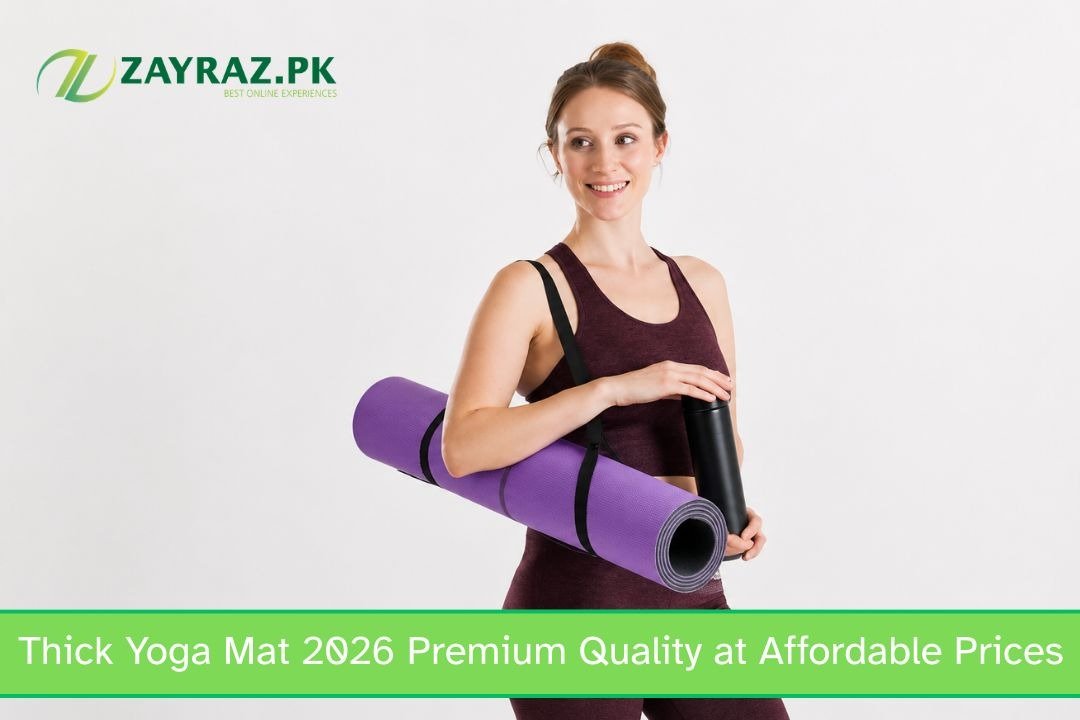
Finding a genuinely comfortable Thick Yoga Mat shouldn’t mean paying premium prices most people simply can’t justify. In 2026, zayraz.pk is changing that equation by offering a mat that delivers real cushioning, durability, and grip — without the inflated price tags often attached to “premium” fitness gear.
Whether you’re a beginner just starting your yoga journey or someone who’s been practicing for years and is tired of thin, unsupportive mats, this guide will walk you through exactly what makes a thick yoga mat worth investing in, and why this particular option deserves a spot in your home gym setup.
Why a Thick Yoga Mat Changes Your Entire Practice
Most people Thick Yoga Mat how much their mat affects their overall comfort until they switch from a thin, basic mat to a properly cushioned one. A Premium Yoga Mat with extra thickness fundamentally changes how poses feel, especially anything involving kneeling, lying down, or extended contact with the floor.
Standard mats — typically 4mm to 6mm thick — often leave knees, elbows, and even the spine feeling the hard floor beneath them during longer holds. A genuinely thick mat, usually in the 10mm-15mm range, adds a meaningful cushioning layer that absorbs pressure and makes uncomfortable poses significantly more manageable, especially for beginners still building flexibility and strength.
Why This Matters More in Pakistan’s Home Fitness Culture
With more people practicing yoga and home workouts across Pakistan rather than relying solely on gym memberships, having reliable equipment at home has become increasingly important. A Thick Yoga Mat Pakistan shoppers can count on needs to handle daily use on tile, marble, or hardwood floors — surfaces that are considerably harder than the padded flooring found in many professional studios.
Key Features That Define a Quality Thick Yoga Mat
Not every mat labeled “thick” actually delivers the comfort and durability it promises. Here’s what genuinely separates a good one from a disappointing purchase.
Real Cushioning Without Instability
There’s a balance to strike here — too much softness can actually make certain standing poses feel unstable, since your feet need some firmness to push against. A well-designed thick mat provides cushioning for joints while still maintaining enough firmness underfoot for balance-focused poses.
Strong Grip and Non-Slip Texture
An exercise mat is only as good as its ability to keep you stable during movement. Look for a textured, non-slip surface on both sides — the top for grip during poses, and the bottom to prevent the mat itself from sliding around on smooth flooring.
Durability That Justifies the Investment
Cheaper mats often develop indentations, cracks, or a worn-down texture within just a few weeks of regular use. A quality thick mat should hold its shape and cushioning even after months of consistent practice, making it a better long-term investment despite a slightly higher upfront cost.
Easy to Clean and Maintain
Since mats come into direct contact with sweat and skin regularly, an easy-to-clean surface matters for hygiene. Materials that resist odor buildup and can be wiped down quickly make daily maintenance far less of a hassle.
Thick Yoga Mat vs Standard Thin Mats – What’s the Real Difference?
If you’ve only ever used a standard thin mat, it’s worth understanding exactly what you’re missing out on with a workout mat built for extra cushioning.
Standard mats are often marketed as “travel-friendly” due to their lightweight, compact design — but this convenience often comes at the cost of comfort during longer practice sessions. Thick mats, while slightly bulkier, offer noticeably better joint protection, making them a smarter choice for anyone doing regular floor-based exercises like yoga, Pilates, or stretching routines at home.
For most home users who aren’t constantly traveling with their mat, the extra thickness is a worthwhile trade-off that significantly improves the overall workout experience.
Who Should Buy a Thick Yoga Mat?
This type of mat isn’t just for dedicated yogis — it’s genuinely useful across a wide range of users.
Beginners benefit from the extra cushioning that makes uncomfortable poses more approachable while building flexibility and strength. People with joint sensitivity, particularly around the knees or wrists, find thick mats significantly reduce discomfort during floor-based movements. Home workout enthusiasts doing Pilates, stretching, or bodyweight training appreciate the added comfort on hard flooring. And anyone practicing on tile or marble floors, common throughout homes in Pakistan, will notice a major difference in comfort compared to thinner mats.
How to Choose the Right Thick Yoga Mat for Your Needs
Before making a purchase, keep these practical points in mind:
- Check the exact thickness — anything between 10mm-15mm offers noticeably better cushioning than standard mats.
- Consider your flooring type — harder surfaces like tile or marble benefit most from extra padding.
- Look for dual-sided grip — texture on both sides prevents slipping during poses and keeps the mat stable on the floor.
- Factor in storage space — thicker mats are slightly bulkier, so consider how you’ll store or roll it when not in use.
Frequently Asked Questions
Is a Thick Yoga Mat better than a thin one for beginners?
Yes, beginners generally benefit more from thicker mats since the extra cushioning makes floor-based poses more comfortable, reducing discomfort that might otherwise discourage consistent practice early on.
Does a Premium Yoga Mat make a noticeable difference in comfort?
Absolutely. A well-made premium mat offers better cushioning, grip, and durability compared to basic budget options, which directly translates to a more comfortable and stable practice experience over time.
Can a Thick Yoga Mat be used for exercises other than yoga?
Yes, thick mats work well for a variety of floor-based workouts, including Pilates, stretching routines, bodyweight exercises, and even light strength training, making them a versatile fitness accessory beyond just yoga.
How do I clean and maintain an Exercise Mat properly?
Most yoga mats can be cleaned using a damp cloth with mild soap and water, then left to air dry before rolling up for storage. Avoid prolonged direct sunlight exposure, as this can weaken the material over time.
Is a thicker Workout Mat harder to store than a standard mat?
Thicker mats are slightly bulkier when rolled up compared to thin travel mats, but most are still compact enough to store in a corner, closet, or under a bed without taking up significant space.
Is This Thick Yoga Mat Worth Buying?
If you’re serious about building a consistent, comfortable home fitness routine, investing in a genuinely well-made Thick Yoga Mat is one of the smartest decisions you can make in 2026. With the right balance of cushioning, grip, and durability, this mat from zayraz.pk offers premium comfort without the premium price ta